
Please follow my blog, Comment and share as you wish.
With Love and Compassion, Daniel Andrew Lockwood
Please follow my blog, Comment and share as you wish.
With Love and Compassion, Daniel Andrew Lockwood
Leaders take charge while the rest sit around and point fingers. I’m here to tell you there is nothing wrong with the world “out there;” at least in the United States. Proof of this lies in the rock solid fact that there are still thousands of success stories being born daily. They are the ones who ignore the critics, they are the ones whom everyone wants to be like, and they are the ones that seem to be blessed. All anyone needs to fulfill their dreams is willingness, determination, and humility. Willingness means giving up some things so that others may find room; no more chocolate anyone? Determination means idleness must be transformed into action; off goes the TV, on goes the lawnmower. Humility means asking others for help; off goes your way, on goes their way.
The first time I moved into a role of authority where my job was concerned, I was both excited and scared. I was excited to see if my ideas would work, scared to be the source of failure if they didn’t. My initial duties included scheduling, ordering supplies, organizing priorities, physical labor, and interviewing and hiring people as well as firing them. All went fairly well until I had to fire someone. I did so with as much dignity and honesty as I could. When they left, angry and rejected, I went into the bathroom and puked my guts out. Freedom [to be a leader] does not guarantee the future holds joyous feelings or endless abundance, but it does guarantee the chance to become less of a slave to the ideas and influence of others; all one has to do is keep a moral focus on the goal while moving into a position of further reliability.
Some think the power to take control of our lives is being influenced by outsiders bent on destroying our ability to express and shape our dreams. Our freedoms are NOT being taken away. Freedom to do what we want is being eroded by those who want things done for them. Don’t believe me? Just listen in on almost any conversation and you’ll hear nothing but complaining about how someone else should be making our lives safer, better, and more comfortable. Most conversations are about what someone else can or should do for us. Personally I am just happy and fine with making mistakes on my own, taking action on my own, taking credit on my own, accepting punishment on my own, and receiving reward on my own. The less people are willing to take charge of their own lives, the more others will.
Now………complaining, for what it’s worth, has a very important place. Without it, nothing would get better. Leaders (those who take action) will complain, listen to complaints, and then generate solutions. Followers (those who are in reaction mode) will complain, listen to complaints, and then make excuses. Any of this sounding familiar? Here’s a prime example of a nationwide “complaint” that gets tossed around without solution. “Religion needs to stay out of government affairs. Any form of worship or reference to God must be absent from all public places that might offend others. Separation of church and state is in the constitution!”
Really?…..I don’t think so.
Here is the first amendment to the constitution. I dare you to read it……in fact I dare you to read all of them. The wording is clear and simple. No “lawyer” talk at all. Wherefore’s and hereto’s are thankfully absent in the interest of a clearer understanding of our basic rights.
Congress shall make no law respecting an establishment of religion, or prohibiting the free exercise thereof; or abridging the freedom of speech, or of the press; or the right of the people peaceably to assemble, and to petition the Government for a redress of grievances.
Real short, real simple. Here is the solution to the problem. As far as religion goes this is what it means; government shall not interfere with religion. That’s it. IT DOES NOT MEAN THAT RELIGION MAY NOT INFLUENCE GOVERNMENT, OR BE PART OF IT, OR BE EXPRESSED BY IT! The so-called “other way around” is perfectly allowed. Wow! Do people not even know their rights? Now to be honest, I don’t want religion influencing my government too much, I think that’s a bad idea……but that’s my opinion, and my opinion is not part of the constitution, so I’m out of luck in that department.
See? Quick solution to an ongoing complaint, and if you want to share being a leader instead of a follower then express this observation with others so they may take action. I’ve said this before and I mean it more than ever now. It’s like we are living inside a giant Jerry Springer show. Let’s put down, humiliate, belittle, degrade, and judge as many people as possible so WE don’t have to do anything to look good. It’s like standing on a pile of crap and proclaiming we’re king of the turds. Forget what others are doing, it doesn’t matter in the long run anyway. When we are a willing audience to unacceptable behavior, we give it reason to expand. Do something, anything to make the world a better place, even if it’s just for yourself. Be a leader, be a prime example of what can happen. I do, and that’s not a self-centered statement. It’s an expression of how much I love myself, and like I’ve said before, I can’t give away what I don’t own. I LOVE you. Paying forward this gift increases the value of what you keep. And THAT really is true leadership.
Please follow my blog. Comment and share as you wish.
With Love and Compassion, Daniel Andrew Lockwood
Please follow my blog. Comment and share as you wish.
With Love and Compassion, Daniel Andrew Lockwood

When we go back to the 1800’s and take a snapshot of typical life, it was rather harsh, at least compared to how good we have it now. No electricity, an abundance of outhouses, no refrigeration, long hours, small wages, and no deodorant. I’m sure most were happy, but let’s face it, living was more about survival than enjoyment. I don’t know about you but I don’t think after a long day of plowing fields I would have the energy to go out and kill my dinner. Education was rare and information was limited. Sickness prevailed and medicine as we know it (if you could even find a doctor) was in its infancy. Obviously people got through their days in the most civilized and comfortable manner possible; if they hadn’t, we wouldn’t be here. One thing is for sure, I’d have a hard time regressing to a world without toilet-paper, air conditioning, and indoor plumbing. Knowing this forces me to be all the more grateful for even the smallest of conveniences. I am well aware that about half the world’s population lives on less than two dollars a day; and yes, I have researched this. I’ll wager that this same line of poverty was much more unbalanced in the past; at least I hope so, for that would be evidence of movement towards a better world for everybody. In any event, I believe we are moving in the right direction despite what the naysayers want to showcase.
Here are my top ten reasons life is worth living. They are equal in importance and the order means nothing.
Am I aware there are flaws and kinks in society? Of course; and I feel we have a long road ahead if we are to forge complete planetary respect for our diverse cultures and societies. There are millions who still suffer and live in squalor. There are those who do not know water is supposed to be clear. There are those who think only the rich wear shoes. There are those who live only to survive, and this is not acceptable to me. I feel the attitude of wanting and recognizing the world to be a better place is a fundamental responsibility. Keep in mind we have made it this far, and wonderful things have happened. There’s no reason this growth of wonder, imagination, and dreams cannot include everyone. Critical mass does not require a majority to move the rest of humanity, it just takes enough people with enough passion to sell their vision to the rest.
Please follow my blog. comment and share as you wish.
With Love and compassion, Daniel Andrew Lockwood

For a long time now my main mission in life has been to prove it’s easy, fun, and magical. The few “guidelines” we need to follow making our existence worth every moment is almost laughable. This doesn’t mean there won’t be times of frustration and grief. All of us have the occasional fire needing extinguished. We encounter unexpected emergencies, situations, and setbacks easily labeled as unwanted, annoying, and painful. Me too. Happens all the time. I wish it didn’t, but there is a part of the equation I always have control over, and that’s how I choose to react.
Water puts out fire. If you disagree with this, you can stop reading now, it won’t do any good to go further. When the fires of life rear up and block our progress, the watery equivalent is necessary to clear the path so we may resume our journey. I’m sure this makes sense. More fire will obviously increase and lengthen the conflict, yet this is the preferred method of dealing with problems as most encounter them. Don’t believe me? Let’s see if any of these illustrations sound familiar.
These are no doubt stereotypical situations, but the futility of their approach is obvious. All are cases of fighting fire with fire. Let’s turn around the same ideas and see how they look if symbolic water is used to confront these circumstances.
Why fight against what we don’t want when cheering for what we do want will have a more creative outcome? Remember, focusing on the eradication of what we wish to eliminate does nothing to build a vision of what will replace it. Those people who move forward with determination and resolve are also the ones who continue to ignore their critics. They know it’s a waste of time to defend against attitudes and situations that are beyond their control; here lies the need for the serenity prayer. Do not, however, misinterpret this action as opening up yourself to attack. The easiest way to define the best objective is to use action to attract what is desired, and reserve reaction to dissuade what threatens growth. It really comes down to not using anything negative as a tool of progress. Don’t fight for what you want, work for it. Don’t label your situation as problematic, label it as opportunistic. Don’t dread the unknown, be excited by it. There are no mistakes, just learning experiences, and these examples aren’t clichéd, they are tried-and-true.
When I let the fires “out there” ignite my own, it’s usually fueled by an overabundance of impatience and selfishness. “My way and fast” usually leads to some sort of catastrophe. At the very least it’s rude and thoughtless. The first set of situations listed above are self-centered, while the second set is based in humility, and that’s really all it’s about. How may I serve? How can I contribute to the dreams of others? Let me offer my assistance. Let me help. It’s kind of weird, but I have more interest and gain more satisfaction in helping others to achieve their dreams rather than work exclusively on my own. Imagine if everyone did this? What a paradise would come to existence. I am water. Show me the fires of destruction and I will rain upon them.
Please follow my blog. Comment and share as you wish.
With Love and Compassion, Daniel Andrew Lockwood

Every time I’ve asked someone if they are open-minded they inevitably say “yes.” This response tells me this quality is a desirable one; nobody wants to admit being close-minded. I don’t; and yet I’m willing to admit that even with this obvious recognition of appeal, I still hesitate to change my point of view; in other words, I’m know probably going to defend what I believe. I feel this observation can be quite useful. When I’ve asked someone this before new, potentially conflicting information is offered, it gently persuades by lowering the defense system of the receiver. In essence it really does open the mind.
When taken one step further, I must ask if “I” am open-minded, even if the person talking to me has no intention of asking it. This requires practice and discipline. When done properly I do my best to let go all thoughts of rebuttal. To be honest if all I do is listen, I’m fine; not easy for a guy like me. I’m an intensely emotional, idea-oriented person. When others speak it triggers a response mode in me, a fault I freely admit needs a lot of work. Some label me as opinionated because of how I react, but that seems somewhat off definition. One of my root belief systems is “I always get everything I want; all I have to do is change my mind.” Yes, I’ll stand my ground and will attempt to justify what I think works best in the moment, and I’ll suggest alternative choices; but even though I do these things, I’m still always searching for a better method.
During one of our many discussions my friend, Joe, handed me the most challenging, or perhaps “disturbing” philosophy I had heard up to that point.
He had been trying to get me to understand and embrace what he was saying when he changed tactics. “Do you think you’re open-minded?”
As he expected, this diminished my attitude of stubbornness. “Uh……yea, I guess I am.” I hesitated while Joe kept staring at me. “Okay, what’s your definition of open-minded?”
He continued to look straight at me. “IF………if you really do want to become an open-minded person, the only thing you MUST believe in is that you might be wrong about everything.”
I didn’t say anything as I felt the blood draining from my face.
On the surface the idea doesn’t really seem to inspire, does it? What if I’m wrong about everything? What if this entire blog is completely off-base? What if I have to start over? What if my entire life has been a mistake? The good news is these type of questions don’t have to be asked. The apparent overwhelming implications need not be disabling. What needs to be in place is the willingness to simply ask similar ones without using the word “I” in a sentence, that’s all. What if someone else is right? What if someone else has a better blog? What if another person knows how to start over? What if another person has all the answers? This is the true power of humility. The exercise of removing the “I” from our lives is also the same willingness that embraces a higher power. I think this revelation has massive implications to those who seek a personal understanding of God.
An “open” mind seamlessly connects us to others and creates empathy. When this thought process is projected it will eventually find itself embracing the universe without judgement. On the other hand, a “closed” mind will have the opposite effect. This thought process will isolate us, invite prejudice, and will conclude with an implosion of selfishness. I’m sure you don’t need me to point out examples, there are plenty in everyone’s life that support this line of reasoning.
I suppose the best way to live is with our arms, our eyes, our ears, and our minds wide open. Is not life about discovery? Who really wants every day to be the same? Why not explore the minds and lives of others? Why hoard old ideas and patterns? Why not clean out the rubbish that no longer serves to elevate us? Throw open the doors and windows of your mind and let the breeze of change refresh all that has become old and stale. It’s just more evidence that cleanliness is indeed next to Godliness.
Please follow my blog. Comment and share as you wish.
With Love and Compassion, Daniel Andrew Lockwood
https://dailypost.wordpress.com/discover-challenges/open-minded/
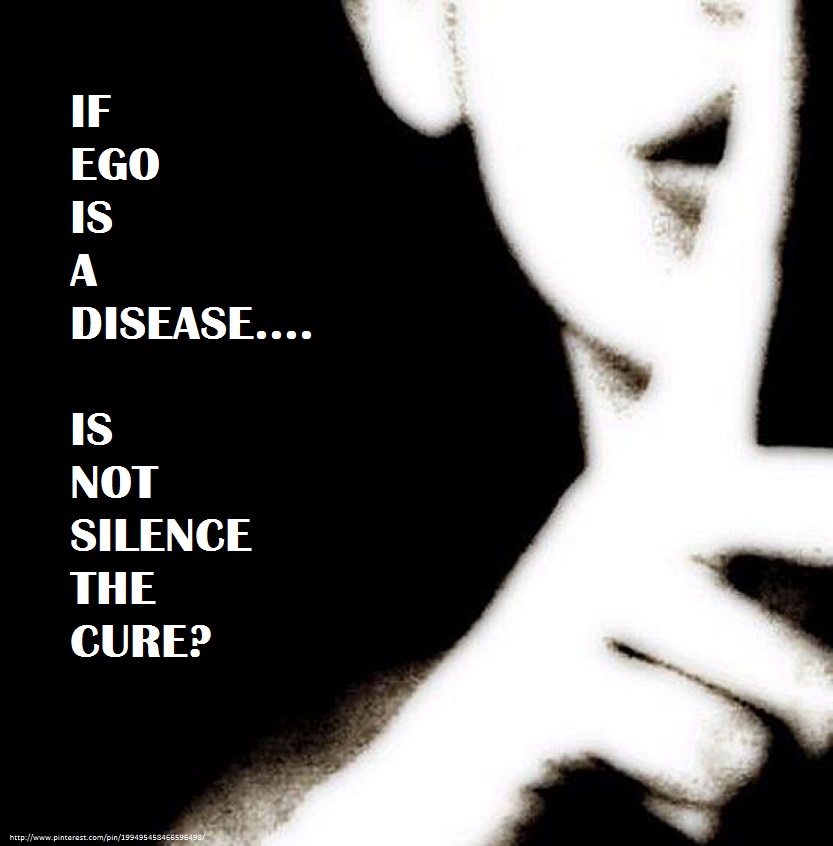

All addictions are dis-ease. Whatever anchors us to (any) material gain in favor of nourishing the spirit is the result of a breakdown in the way we are supposed to live and thrive. You may say our very existence is material in nature so the world “out there” is what provides us life, happiness, and purpose. That’s a lie; and if you have the courage to read forth, I’ll do my best to illustrate the point.
A full year into my recovery I was still having a hard time accepting the notion that alcoholism (or any addiction) was a disease. Evidence supporting my conviction seemed strong enough. My life and body were returning to health. I felt productive, peaceful, and focused. In my opinion, as long as I stayed away from the bottle, and continued in the program, the road of success would continue to unfold; I was wrong. It was all too soon well-worn symptoms and habits once commonplace during my years of blurred and incoherent meandering began to reassert themselves. They weren’t the dominating force they once were, that’s for sure, but they were hazardous to my well-being, destructive to the environment, and they were beginning to escalate. Was the “shine” of my new life beginning to tarnish? Was I fooling myself that simply staying away from alcohol and following the steps would cure me of what seemed to be my nature? There is no doubt. Luckily the relationship with my mentor was still in full swing. He helped me put the brakes on the resurrection of my old lifestyle before it got to the point where momentum would overrule any intent of stopping it. This is the turning point where I finally learned that alcoholism truly is a disease.
The term “Dry drunk” is the label for identifying the reactions of alcoholism without the catalyst being involved. (Notice that I said reactions, not actions; I’ll get to that later) I’m sure the term can be applied to any addiction as long as “drunk” defines an excess of self-destructive, self-centered behavior. Food, sex, drugs, money, power, and so on, can all be obsessive objects of an unhealthy focus. In essence we can be “drunk” on almost anything.
I sat down one evening with my friend and he explained it to me. “You’re still having a hard time coming to grips with the notion that alcoholism is indeed a disease?”
“Yes. I suppose I still see it as nothing more than a bad habit meant to be broken.”
Joe smiled one of his “here we go down the rabbit hole” smiles and continued. “Describe to me what happens when you drink.”
“Excuse me?”
“Describe what happens leading up to you taking a drink. Let’s say you have been sober for a few days, white knuckling it so to speak. What takes place when you make the decision to get drunk?”
I attempted to clear the uncomfortable feeling beginning to build in my throat and went into state. “Well……I guess it’s like another spirit enters my body. I’ll be feeling good, terrific in fact, and it seems to come at me sideways. I’ll get in the car in this dreamlike trance knowing I’m doing something horrible, drive to the nearest liquor store and buy my usual brand of poison.”
“Then what?”
“I always start asking myself questions. Why am I doing this? What’s wrong with me? Why can’t I quit? I’ll walk in to my apartment and sit there for a few minutes with an unopened bottle in my hands, staring at it, thinking it’s not open yet; I haven’t broken any rules unless I drink it. I then open it up and slam it down along with a boatload of shame and regret.”
Joe wasn’t smiling anymore. In fact he was crying a little. “I know what you mean. Been there myself.” He paused, searching for the exact right words to say next. “Is alcohol the problem in the scenario you just described to me?”
“I’m not sure I know what you mean.”
“Is not alcohol a reaction to the problem?”
A light bulb started going off over my head, and I began to see the truth of it. “Yes…..there’s a long series of events that must take place before I even drink.”
“Now you’re getting it. The thought process that leads up to you doing something you know you don’t want to do is broken. You are going somewhere you don’t want to go and you’re going to end up somewhere you don’t want to be. Your brain is at war with itself. In other words you are mentally……….. what?”
I filled in the blank rather quickly. “….ill…..”
“Certifiable, mister. Alcoholism is a disease of the mind, not the body.”
“Is there no cure then? Will it never go away?” I asked nervously.
“No, not completely. Its influence can wither and lose strength, but the seed will survive and continue to ask for nourishment and rebirth throughout your lifetime. The good news is there are actions you can take to keep it in remission, and done properly they will steer you towards great achievements. There’s an advantage to continuing an effort in pursuit of what is desired and evasion of what must be avoided; this is called conscious evolution. All people inevitably evolve by means of subconscious evolution. They adapt to the environment, they do what is necessary to survive, they avoid pain, and they seek pleasure. The few that go beyond the automatic requirements of living can command great resources. They are the ones the rest of the human “tribe” will look to and recognize what is possible. They are also the ones who will provoke more opposition than support, because challenging someone to be better by example is often interpreted as pointing out that where they are now isn’t good enough.
Joe went on to explain how the brain works. He had a higher education in philosophy and psychology, so when he spoke, I listened. The way it was put to me was like this. Think of the mind as the hard drive of the human computer. Programs are input as we grow older so we may adapt to specific tasks. Some we embrace through awareness, others are downloaded by pure instinct. All are designed to cope with our environment. Most are compatible with the rest, but when a program such as “excessive drinking” eventually begins to fall out of harmonious synchronization with the others, (that is the “program” has become outdated and inefficient at providing the mind and body what it once was capable of) pain and suffering usually occurs, both mentally and often physically. “Programs” can be made obsolete or unused by installing new, upgraded programs, but old information can never be erased. Here lies the real (and BOY, do I mean real) problem with addiction. When we attempt to re-route thought patterns of addiction, we will experience great difficulty, because the neural pathways of addiction are located in the limbic system- the area of the brain that processes functions directly related to emotion and survival. Make no mistake, thought patterns of addiction are energetically alive, and that which is alive and becomes threatened with obsolescence will fight to survive, sometimes in covert ways. The nature of these impulses will continue as long as we live, which is why awareness must be maintained and progress must be continued.
Do the shadows of the past ever attempt to block my path of dedication towards a better tomorrow? Of course; but in doing so they remind me of what I am motivated to stay ahead of. You may find it strange, but I would not give up one minute of experienced misery for the promise of eternal bliss. I have said this before and I mean it, because all the suffering and all the pain I once went through is my most prized possession. Knowing what I must move towards as a result of the chaos I leave behind is truly priceless. Do I have a disease called addiction that resides even now in my mind? Yes. Is my destiny set to a live a life of constant courageousness as a countermeasure to what affects me? Yes; but all of this is a gift, not a curse, for I can think of no better way to fulfill my absolute potential.
Please follow my blog. Comment and share as you wish.
With Love and Compassion, Daniel Andrew Lockwood
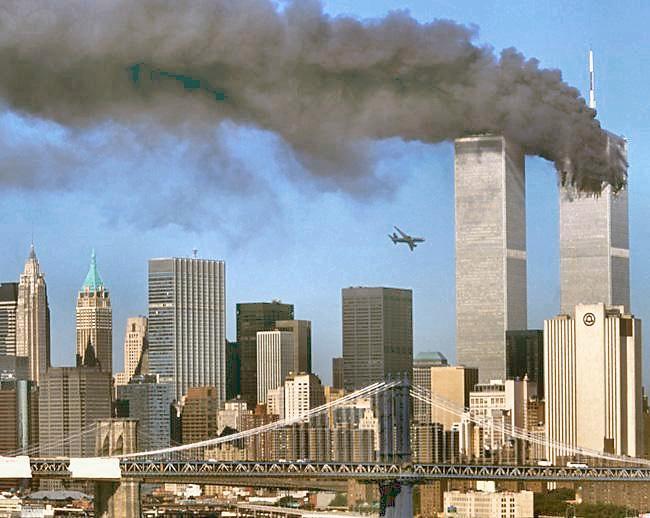
I do not like who I used to be. There is no doubt I’m a better person than I was, far beyond that which once caused me self-disgust, but I do wonder if there are other traits laying in relative dormancy, waiting for an unknown catalyst that will allow them to come festering to the surface. If they are anything like what happened to me here, I both dread and welcome it. This entry does not reference any addiction; it addresses a personality flaw that came to light in the weeks following 9/11. If you’re wondering how this could align with the ongoing topics of self-improvement, self-actualization, and recovery, read on. You’ll realize by the end of this article why I’ve written it.
Tuesday morning, September 11th, 2001….. Two co-workers and I were at a high school in Denver awaiting the delivery of an underground acid tank that was to be installed as part of the laboratory remodel. Our work load was light and there was nothing to do but wait. I was getting caught up on paperwork to pass the time while we listened to the radio in the trailer. Normal programming was soon interrupted and news came on that a plane had struck the World Trade Center. The DJ said there might be some deaths. My first thought went back to WWII when I had read about a bomber hitting the Empire State Building. There were some casualties and the structure is obviously still there, so while there was an immediate concern for the events so far, my initial reaction was more of curiosity than horror. With nothing else to do I suggested we go to one of the empty classrooms where construction was taking place and turn on a TV to see if we could get some more information. Like everyone else in the nation we had no idea what we were about to witness.
We came in just in time to see another plane fly into the second building; and although I had no insight to my reactions at the time, this is where my character defect started kicking in. I ask you, the reader, to forgive me for what I’m about to say. It’s difficult to write about, but I feel it’s an important observation nonetheless. Bear with me and you’ll find out how everything came out on the other side.
In my opinion it’s rude to slow down past car accidents to gawk at the wreckage. I’ve always been one to insist on NOT looking out of respect. It’s reprehensible behavior and I’ve been practicing what I preach all my life; that is up until that morning. It was so difficult to not look. I remember dozens of shaky camera angles; obscured views from the sky and street where confusion and panic were being voiced. Images flitted across the screen while stoic news reports and random speculations were voicing their opinions in the background. And then it happened. None of us watching really saw the first tower fall, but we did see the second one. Its mighty bulk tilted ever so slightly and disintegrated into itself obscured by a giant cloud of smoke and dust. Like so many of us the image is burned into my memory, unfortunately so was my reaction to it. All I could think was, “Wow, that’s good special effects!” I might have even said something, I don’t really remember. I was so detached from the event I had no empathy about it for some time. The question was, why couldn’t I feel anything?
Three weeks have passed now. I don’t think our enemies were counting on the reaction we had as a nation. If they expected us to cower and crumble, well, THAT didn’t happen. If anything our resolve was strengthened by the disappearance of all the petty squabbling amongst ourselves as we (and a good portion of the planet) banded together and stood in unity for peace. It was a nice side-effect to the carnage of that day. Every night the news was dedicated to what had happened, and while I believe that news is only news the first time it’s seen, I agreed with the continuing coverage. Like Novocaine, the numbness I was injected with was beginning to vanish as the events of 9/11 were re-played in an unending loop. They began to get harder and harder for me to watch. Finally I had enough. I walked into the bathroom and threw up. I also began sobbing; partially for the victims but more because I realized there was something very wrong with me.
I was immobilized.”Why hadn’t I reacted this way when it happened? Where is my humanity?” “Am I evil and selfish?” It took some reflection but I now know what was “wrong,” and as I move through the second half of my life, I seek to reinforce a crucial part of me that was missing. Sometime in the late eighties I came across an article debating the influence of violence in media aimed namely at television and movies. Video games weren’t realistic enough to be mentioned, but I’m sure they’d be included if it were written today. I read forth with a preset point-of-view. My opinion was that people know the difference between what is make-believe and reality, and honestly I still believe it’s true, but that wasn’t the focus of debate. The argument was this; if someone sees any act of brutality whether it’s real or not they will not react with the same revulsion that would normally surface once the actual event is witnessed. They become desensitized. What should obviously be an expected reaction becomes dulled and unsympathetic. I changed my mind once I had finished reading the piece, but I never changed my habits; I went on watching and being entertained by violence. By the time 9/11 occurred I was so detached from reality that my mind went to the only source of connection I had established, fantasy.
As time went on I slowly began changing. Most of the actions in my life since I’ve stopped my self-destructive behavior have been focused on creativity; writing, drawing, building, and learning have worked wonders as they drive me towards becoming a better man, but what I initially missed was improving upon a more productive and creative, reaction to life. When I magnified appreciation, acceptance, tolerance, and forgiveness I ended up manifesting a creative environment. My perspective on all which surrounded me was beginning to align with what I wanted for myself. I’ve done my best to drop the desire to compare the present with the past and this has helped me to better absorb the moment without as much prejudice. Taking on the roles of both participant and observer has shifted my perspective towards a more compassionate lifestyle, though I’m not nearly in a place I should be yet. Selfishness and self-centeredness still assert themselves frequently, especially in the form of not listening and interrupting. Impatience, judgment, procrastination, and a whole plethora of other unwanted personality traits are still in my bag of tricks. Fortunately, a lot of them are becoming rather dusty.
My “observer” is to the point now where simply I cannot watch the yearly replay of those horrific events from twelve and a half years ago. I’ve tried, and it’s just too much. Too much suffering, too many lives forever fractured by the losses of their loved ones. All the tomorrows gone forever, and all the memories that cannot be erased. For those wounded who survived, it must be like a splinter in the soul never to be removed; a constant reminder of what cannot be repaired or replaced.
Last year my wife and I visited ground zero. I fully expected to enter a space of restlessness and despondency. It was nothing of the sort, in fact it was one of the most spiritual places I’ve ever been; peaceful, beautiful, and inspiring. The museum on the grounds was not open yet, but we did attend another called “The Ground Zero Museum Workshop.” There are stories and photos here you probably have never heard or seen. It chronicles the event itself along with the aftermath in the weeks and months that followed. Here is a link- Ground Zero Museum Workshop. This tiny gallery (it’s literally one room) is also a holy place. I highly recommend it.
Those people who died that day paid with their lives to give us the gift of not only a more United States of America, but a more united world; one where we can look at each other and not just accept our differences, but ignore them completely. They say what doesn’t kill us makes us stronger. Damn right.
Please follow my blog. Comment and share as you wish.
With Love and Compassion, Daniel Andrew Lockwood
There was a time, not so long ago, when believing in myself was nothing more than knowing I could drink a fifth of vodka and then eat a whole extra-large pizza in one sitting. My skills were as dull as a marshmallow and my drive was limited to wherever the closest liquor store was. I placed no value on my existence, nor did anyone else. It was as if I were incarcerated, doomed to watch the world pass me by through the bars of my little window. To be honest, I was jealous of those who seemed to flow through their days with focus, determination, and purpose. Their attitude was one of self-respect, fortitude, and dedication; while mine was one of lack, self-destruction, and selfishness. I wanted more than anything to possess what seemed unreachable. Through practice, patience, and effort I was able to nail down the following definition of success and fulfillment.
I believe above all other (material) pursuits, beyond money, power, and fame there sits at the top of the mountain, confidence. Once possessed nothing else is needed. This elusive quality is the elixir of manifestation. It moves in grace, planning its strategy while embracing the moment, knowing what it wants without ignoring the audience. It does not seek to improve its image by boasting or advertising. It is quiet, calm, and aware. It does not complain, nor does it ridicule. It gives credit and takes little. When this behavior is attempted by those who don’t understand how it must be carefully developed, it comes across as cockiness, and this of course, is the way of oblivion.
Here is the equation- Cockiness wants admiration for its “abilities” without being asked to provide actions or a history to back them up. Its modus operandi is recognition and approval. It prefers the sales pitch over the product. Confidence, on the other hand, wants to take action, thereby allowing it a chance to build a list of achievements. It needs no recognition from others and cares not for trophies. It prefers the product over the sales pitch. Cockiness lives in a state of reactiveness, it plays the antagonist. Confidence is about moving through life proactively and it plays the ally. Cockiness is quick to point out what needs fixed and is easily insulted, which means it’s reactions are mostly of a mistrusting, defensive nature. Confidence is quick to complement and willing to help, which means it’s actions are mostly trusting and cooperative.
How many seek the self-assured life but settle for its adversary? I certainly have on many occasions, especially when I was a young man. It’s easy to understand the temptation of trying to impress others without having to provide evidence. Shortcuts have an appeal, but rarely do they yield reward. The “reward” in this case is the journey, nothing else. It’s like trying to convince someone you’re a bodybuilder without having the muscles to prove it. It sounds funny, but this type behavior is overwhelmingly common.
All I can share is what I know so far. Most of what I’ve picked up over the years comes from mimicking the patterns of those who already possess what I want. Here is a list of twelve bullet points that might help. It’s not professional, it’s just my opinion.
Am I always confidant? No. I am, however, much more than practiced I used to be, and I expect this skill will increase with continued awareness. Not a day goes by where I don’t “break” at least some of these rules and end up paying instantly for my ignorance. At least I am also confident that by action I’m quite capable of demonstrating what NOT to do.
Please follow my blog. Share and comment as you wish.
With Love and Compassion, Daniel Andrew Lockwood
by Cherie White, Author and Anti-Bullying Advocate
Motivate | Inspire | Uplift
Create A Better Version Of Yourself
Dr. Andrea Dinardo, Ph.D., Psychology
From darkness to light.
11 years of painstaking love
The Art and Craft of Blogging
Find your Purpose. Find your Story.
Alcoholism recovery in light of a Near Death Experience
Writing about writing
IDEAS FOR A BETTER WORLD
Tutorials about WordPress, blogging, social media, and having your say on the web.
I can't sleep...
Written by people in recovery for people in recovery
Heal & Free Your Soul ~ In The Garden of Blessitude
Personal Musings of My Journey To and Through Recovery


 LIGHT ON THE THRESHOLD